
Start with the path of the water
Roof leak tracing
Finding where water enters is the job. A stain on drywall can be downstream from the actual entry point, especially around valleys, vents, and step flashing.
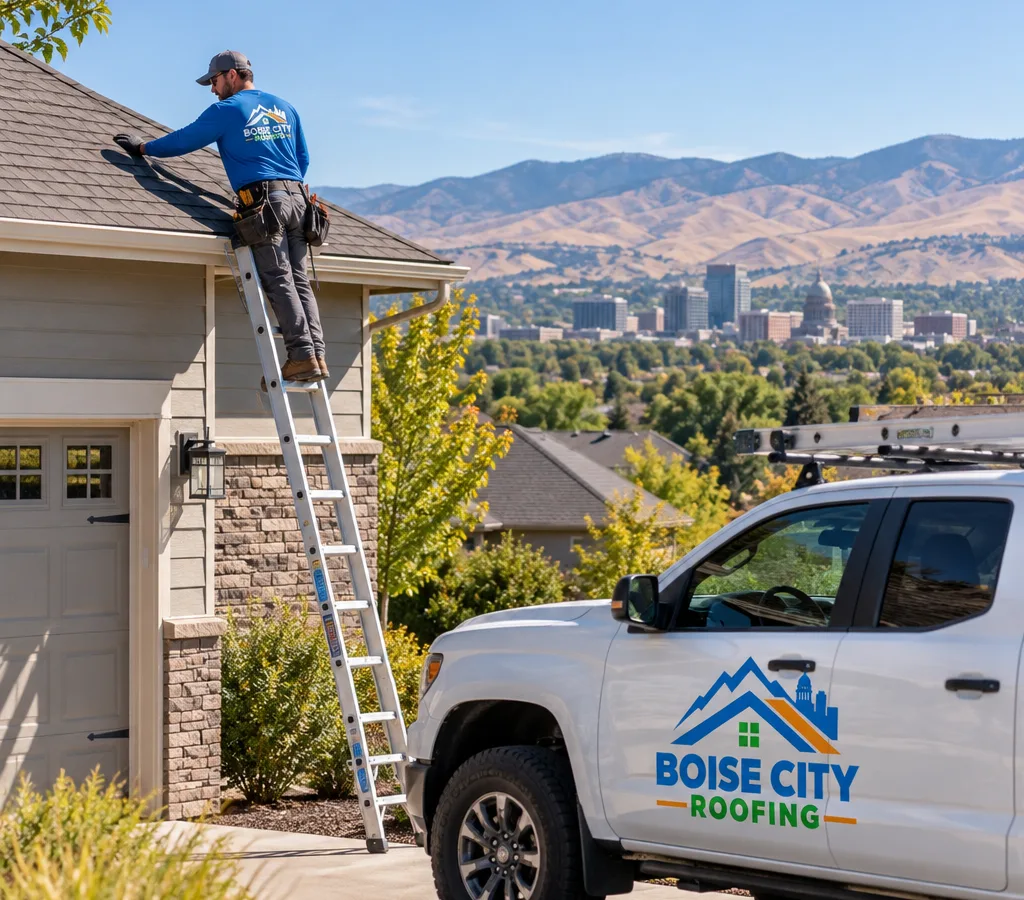
Roof repair in Boise, Idaho
Describe the leak or damage once and get connected with a local roofer who handles repairs for Boise-area homes.
CALL NOW: (208) 314 1953Find the source before fixing the surface
Boise roofing repair usually starts with one goal: stop water from getting past the roof system, then restore the roof so the fix holds through the next weather cycle. The contractor you're connected with will typically begin with a walk-around and a roof-surface inspection, then confirm findings from the attic, when accessible, to trace the leak path.
A thorough inspection usually focuses on the places roofs fail most often:
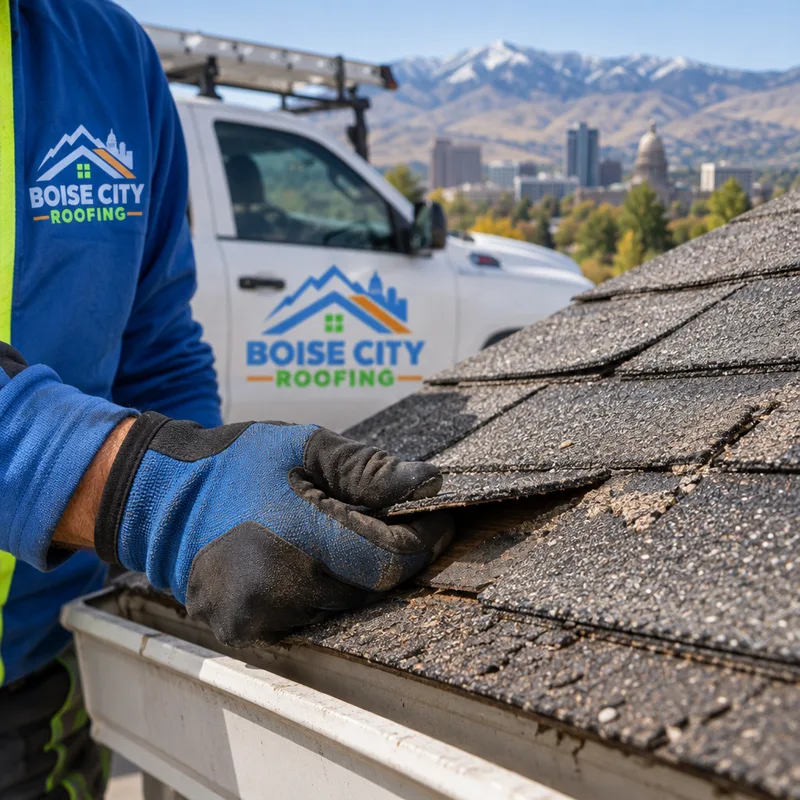
In Boise, wind events and hail can damage asphalt shingles without leaving an obvious hole. A roofer may look for granule loss, bruising, cracked mats, and edge lift. If you're seeing water inside, the contractor will usually prioritize a temporary dry-in plan only as needed, then move to the permanent repair once the problem area is confirmed.
If your property is a business or multi-tenant building, roof repair may still be possible, but the materials and details change. Many owners handle that separately through commercial roofing.
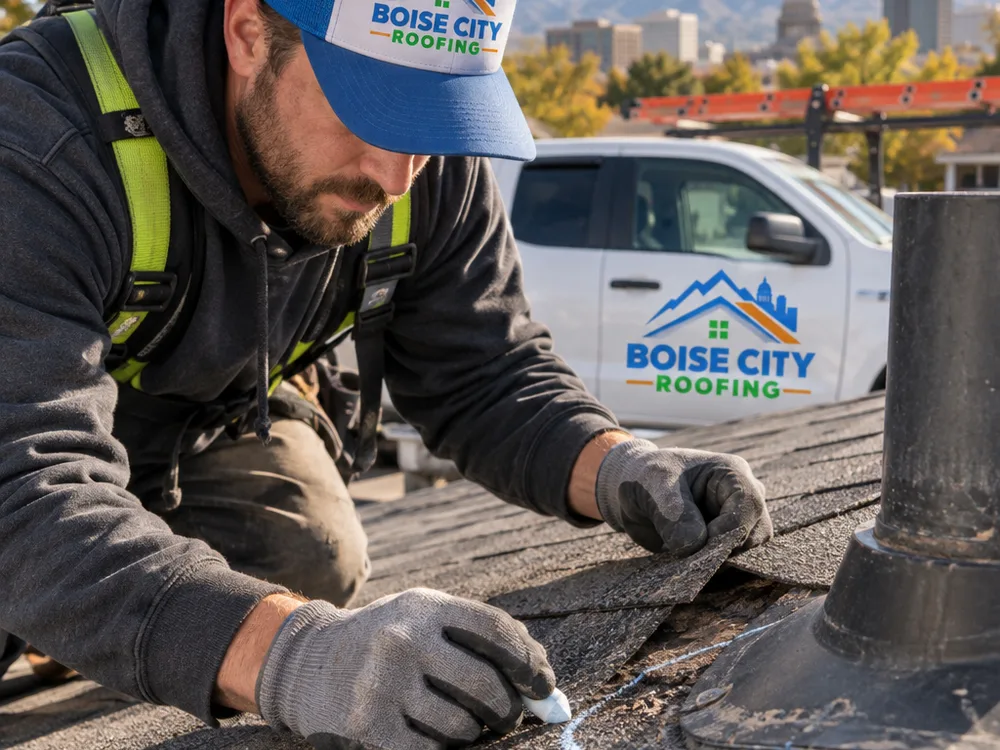
Targeted repairs for common weak points
Start with the path of the water
Finding where water enters is the job. A stain on drywall can be downstream from the actual entry point, especially around valleys, vents, and step flashing.
Replacing missing, creased, or cracked shingles and resetting surrounding courses so water sheds correctly instead of catching edges.
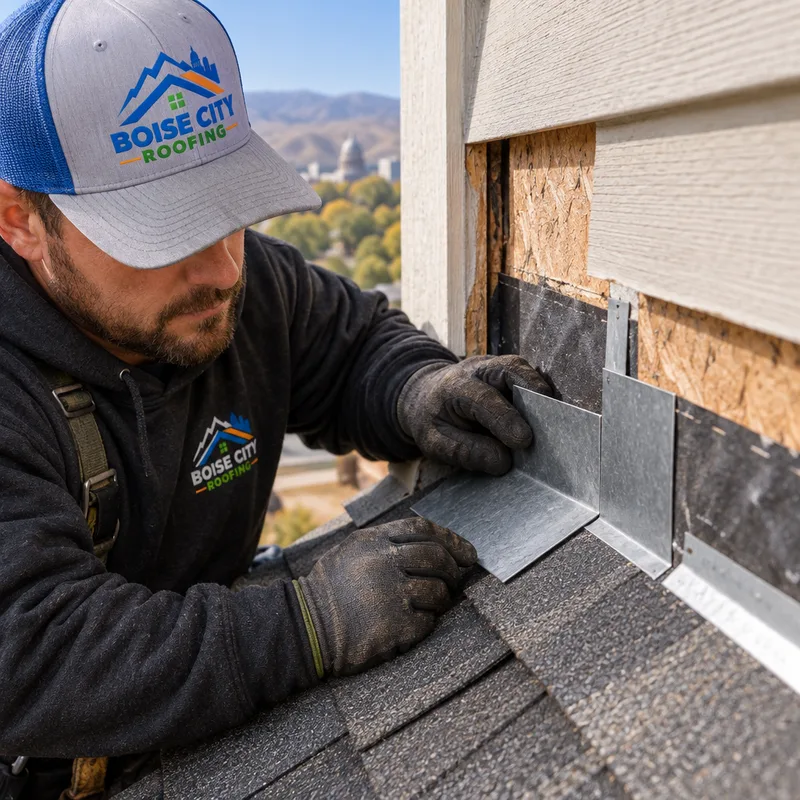
Reworking chimney, wall, and pipe flashing details that have loosened, corroded, or separated at seams and corners.
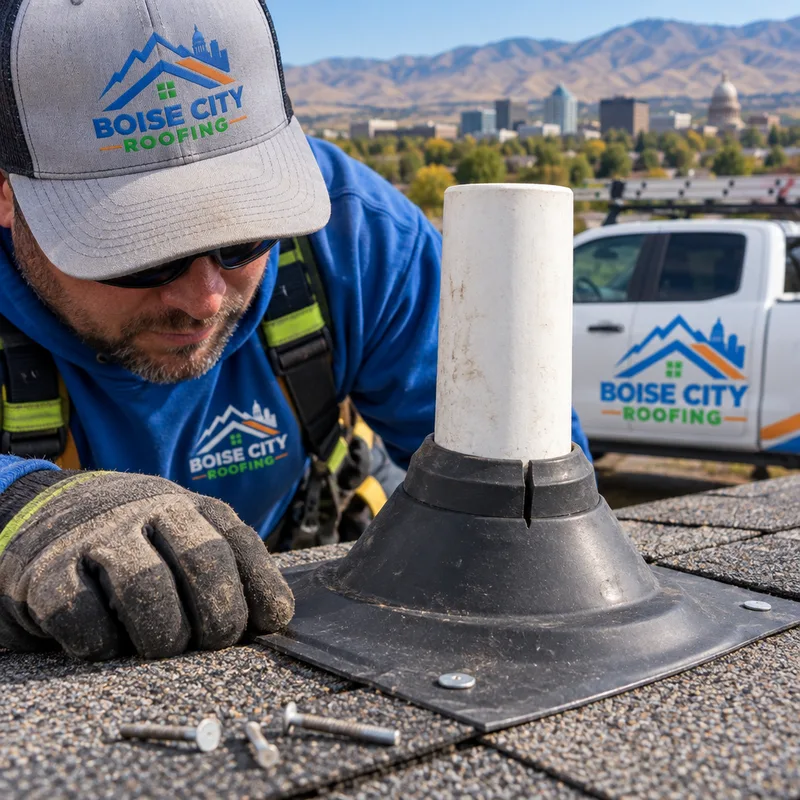
Repairing split pipe boots, failed sealant around penetrations, and exposed fasteners that can lead to slow leaks.
Addressing punctures from fallen branches, impact marks, and blow-off areas where the roof surface is no longer protecting the layers underneath.
From your call to the repair
Tell us the roof type if you know it, where you see water or damage, and whether anything changed recently, such as wind, hail, nearby tree work, a new vent, or gutter issues. You only need to explain it once.
We match your details to an independent roofer who handles roof repair in Boise, Idaho and the nearby area. You then speak with the contractor directly about the next steps.
The contractor identifies the leak source or damaged area, explains repair options, and lets you know what has to be opened up or replaced to make the repair hold.
The contractor completes the agreed scope and walks you through what was done, what to watch for next, and any maintenance that can help prevent the same issue from returning.
If you're comparing roof repair options in Boise, describe the leak or shingle damage once and get connected with a local roofer who can inspect it and explain the repair.
CALL NOW: (208) 314 1953Damage, leak paths, and completed work
Practical answers before you call
Roof repair usually makes sense when the problem is isolated to specific details like flashing, a vent boot, or a limited shingle area. If the contractor finds widespread shingle brittleness, repeated leaks in multiple areas, or failing underlayment across large sections, they may recommend a broader approach. You can still start with an inspection and decide based on what they show you.
The most useful details are where the water shows inside, when it happens—rain, snow melt, or wind—and what roof features are above that spot, such as a valley, chimney, skylight, or vent pipe. Also mention recent wind or hail and whether tall trees are near the roofline.
Not always, because water can travel along rafters, decking seams, insulation, or a bathroom fan duct before it drips. A roofer typically confirms the path from the attic when possible, then checks the roof surface for matching entry points like flashing joints, nail pops, or shingle damage.
A repair-focused inspection usually includes shingles and ridge caps, metal flashing at walls and chimneys, pipe boots, valleys, exposed fasteners, and signs of soft decking. The contractor may also look at attic ventilation and moisture patterns because trapped moisture can mimic a roof leak and shorten shingle life.
Yes, when the surrounding shingles are still in good condition and the repair restores the overlapping pattern that sheds water. The contractor will typically check that replacement shingles can be integrated without breaking adjacent brittle shingles and that seal lines and fasteners are placed to resist wind lift.
The contractor generally works from the exterior, protects landscaping where needed, and may access the attic to confirm the leak path. Expect some noise from foot traffic and tools. If decking needs replacement in a small area, you may hear cutting and fastening before shingles and flashing are rebuilt.
You call Boise City Roofing, describe the problem once, and we connect you with an independent local contractor who handles roof repair in the Boise area. You discuss inspection timing, repair options, and any quote details directly with the contractor, and you decide whether to move forward.
One call starts the repair conversation
Call and describe what you're seeing. We'll connect you with a local Boise-area roofer who can inspect the roof, explain the repair options, and take it from there.
Boise & surrounding areas